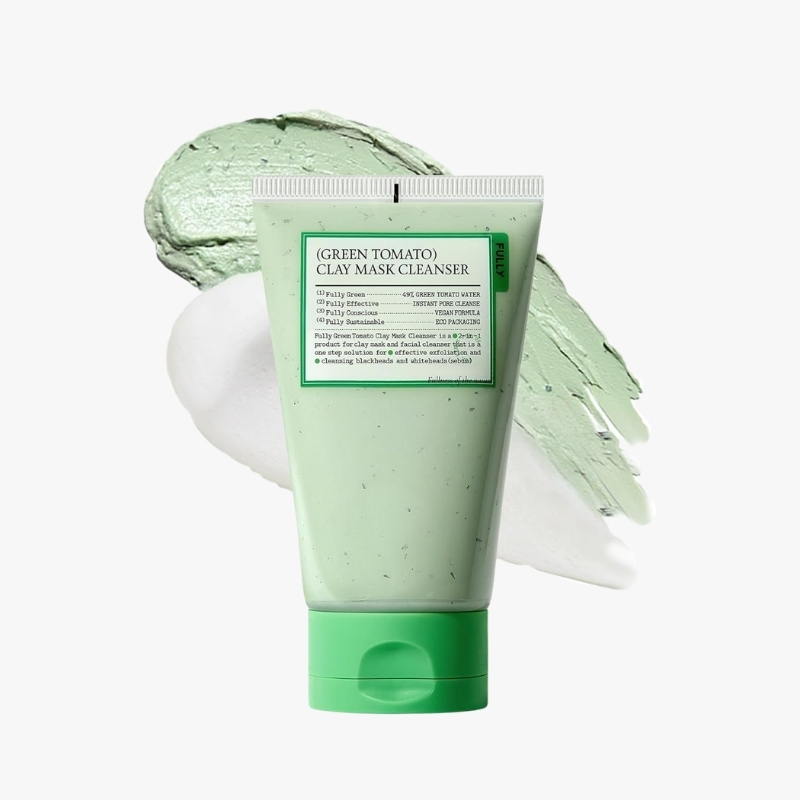
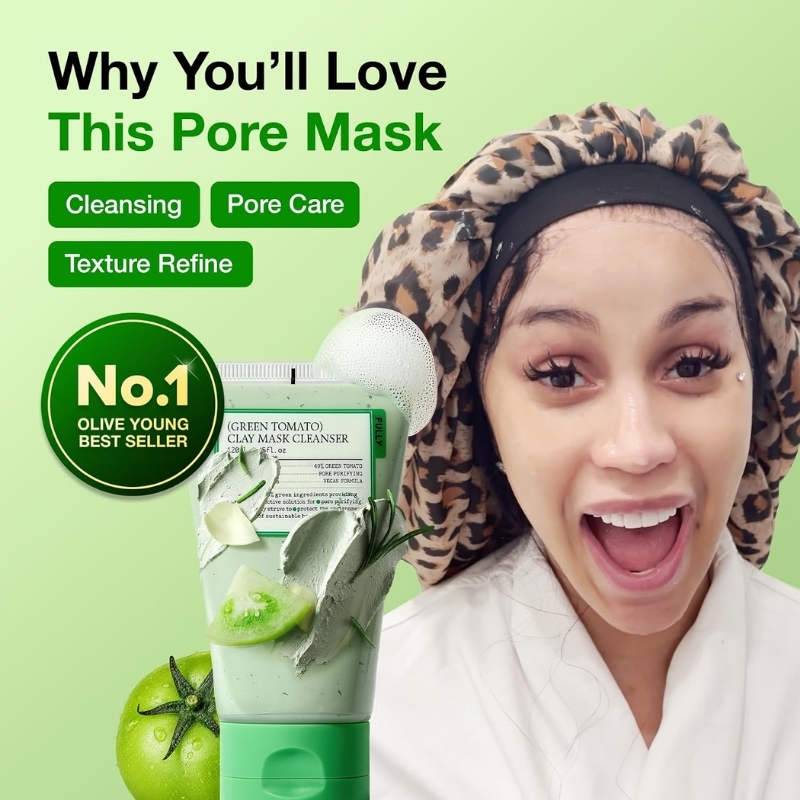





FULLY - Green Tomato Clay Mask Cleanser (120ml)
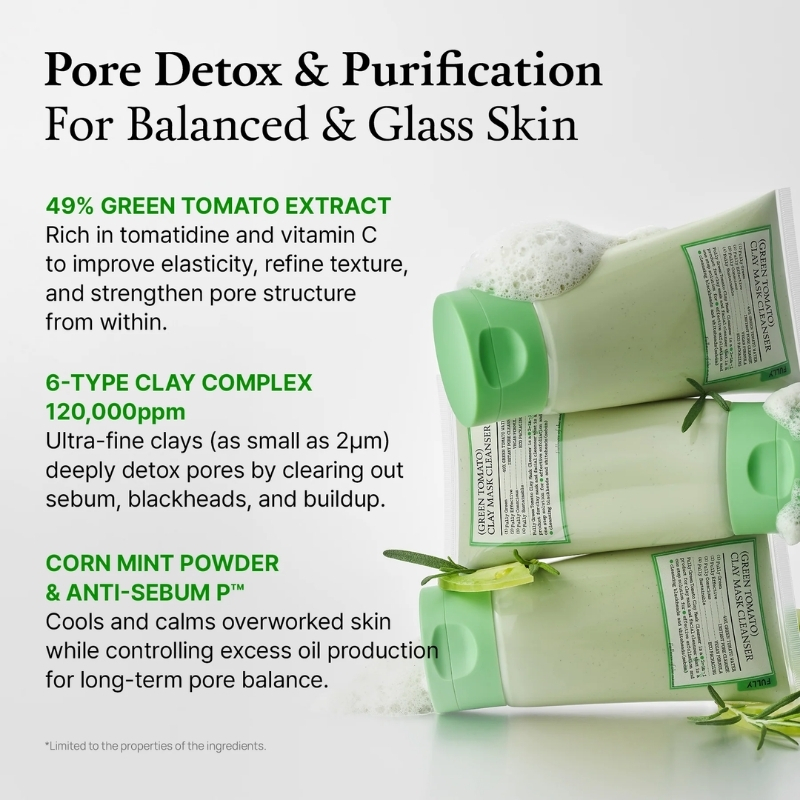
FULLY Green Tomato Clay Mask Cleanser is a versatile 2-in-1 clay mask and foaming cleanser designed to absorb excess sebum, remove surface buildup and help congested, enlarged-looking pores appear cleaner and more refined. According to the supplied product information, the formula contains 49% Green Tomato Extract and a 120,000 ppm six-clay complex, alongside Centella Asiatica Extract, Beta-Glucan and Ceramide NP. Its clay-to-foam texture can be used as a quick wash-off mask for more intensive pore care or lathered with water as a facial cleanser.
Benefits:
- Provides intensive pore cleansing: Bentonite, Kaolin and four additional clearly identifiable clays help absorb excess sebum and lift accumulated surface residue.
- Helps reduce visible pore buildup: The clay-rich formula helps remove oil, dead surface cells and debris that can make pores appear more congested.
- Helps improve blackhead and whitehead appearance: Regular removal of excess oil and buildup can make visible blackheads and whiteheads appear reduced without claiming permanent removal.
- Controls excess shine: Multiple absorbent clays and Mentha Arvensis Powder help leave oily areas feeling cleaner and more refreshed.
- Supports smoother-looking texture: Clay cleansing and gentle massage help remove accumulated surface buildup for a softer, more refined appearance.
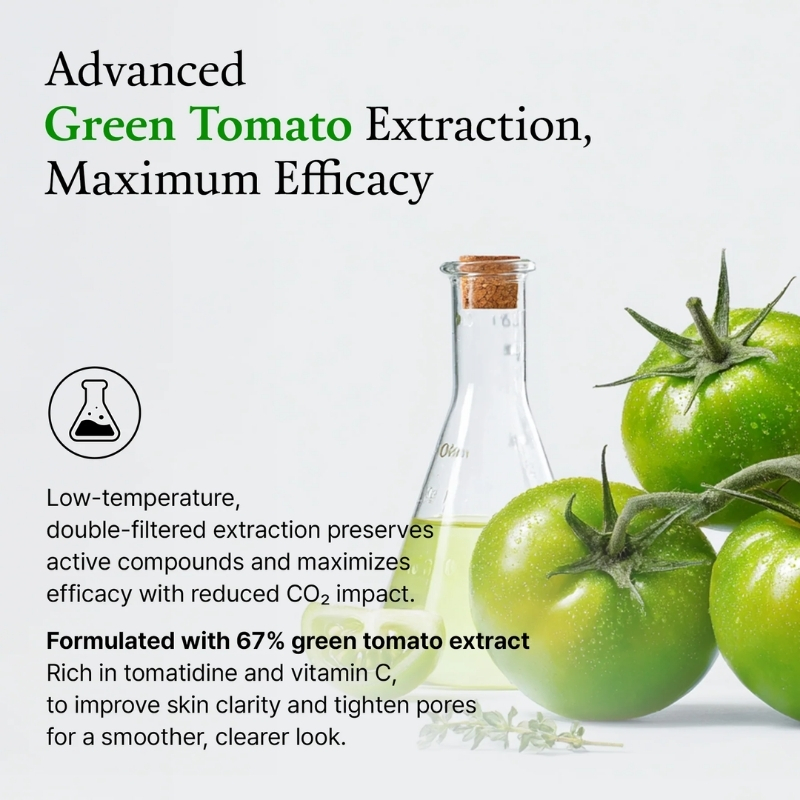
- Provides Green Tomato-based botanical care: Solanum Lycopersicum (Tomato) Fruit Extract is the first ingredient and provides antioxidant and skin-conditioning benefits.
- Helps maintain skin comfort: Centella Asiatica Extract and Beta-Glucan provide soothing and moisturizing support alongside the deep-cleansing ingredients.
- Supports the moisture barrier: Ceramide NP and Hydrogenated Lecithin help condition the skin and support barrier comfort.
- Offers refreshing pore care: Mentha Arvensis Powder contributes to the product’s fresh, cooling skin feel.
- Works as two products in one: Use it as a quick clay mask for more intensive oil and pore care or as a rinse-off foaming cleanser for everyday cleansing according to skin tolerance.
Skin Types: Normal • Combination • Oily • Blemish-prone skin • Dry skin with reduced frequency • Sensitive skin with appropriate tolerance
Skin Concerns: Enlarged-looking pores • Excess sebum • Blackheads • Whiteheads • Congested-looking pores • Rough texture • Surface buildup • Dullness • Uneven texture
Clinical Results:
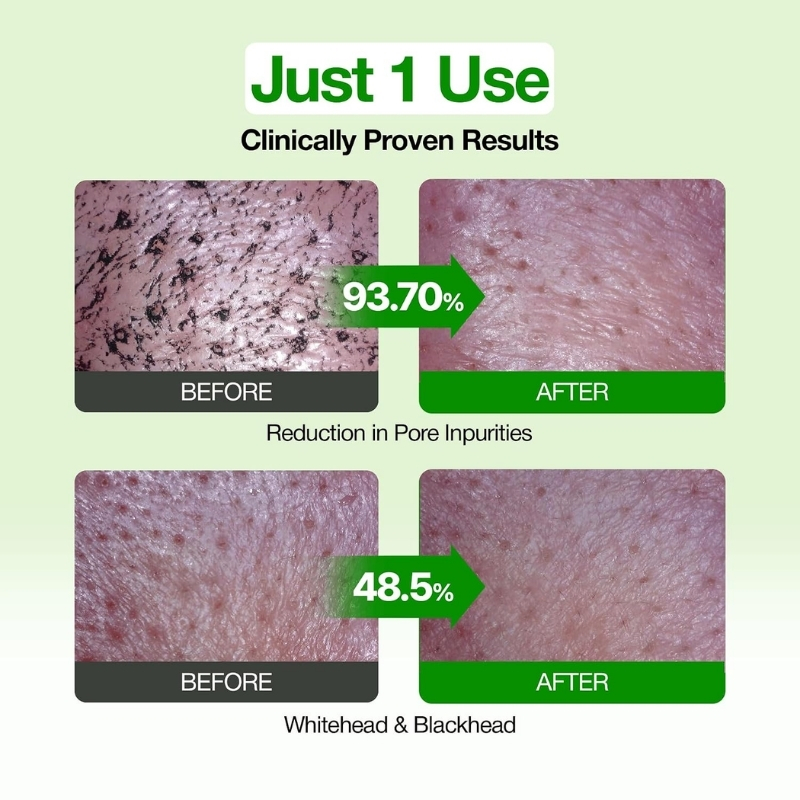
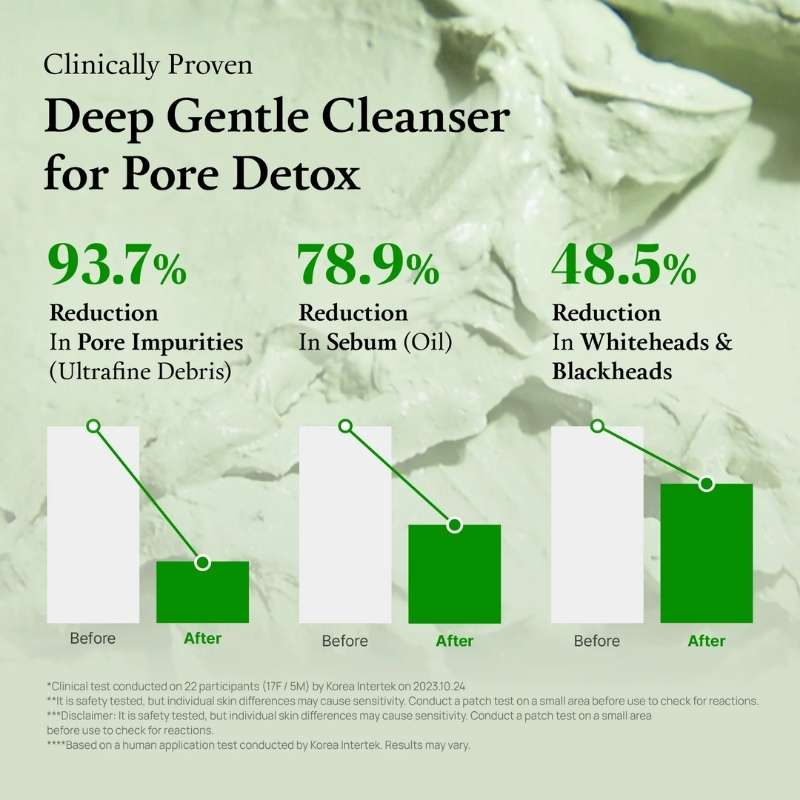
- The supplied clinical information reports a 93.7% reduction in ultra-fine pore debris.
- The supplied clinical information reports a 78.9% reduction in sebum.
- The supplied clinical information reports a 48.5% reduction in whiteheads and blackheads.
- A separate set of supplied clinical information reports a 75.44% reduction in pore waste and a 57.44% reduction in excess sebum after a single use.
- The differing percentages may reflect different tests, measurement endpoints or conditions, but the supplied information does not provide enough methodology to determine the reason for the variation.
- No testing institution, participant number, complete test duration or measurement protocol was supplied.
- The product was also supplied as a 2025 Women’s Health Skincare Awards – Best Clay Mask winner.
- Individual results may vary.
How to Use:
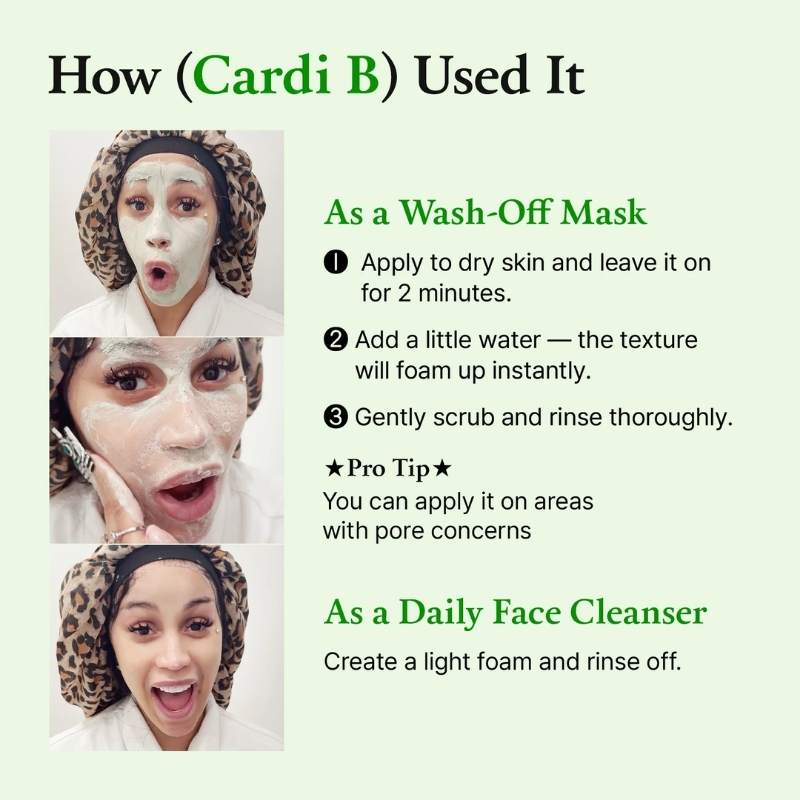
- As a daily cleanser: Wet your face and dispense approximately a pea-sized amount into your hands.
- Add water and work the product into a soft lather.
- Massage gently over the face without aggressive scrubbing, concentrating on areas prone to excess sebum or congestion.
- Rinse thoroughly with lukewarm water.
- As a clay mask: Apply a generous, even layer to clean, dry skin while avoiding the eye and lip areas.
- Leave on for approximately 2–3 minutes. Although some supplied directions mention 3–5 minutes, the more recent product information recommends up to 3 minutes; shorter contact is preferable for dry or sensitive skin.
- Wet the mask with water and gently massage in circular motions until it develops a soft foam.
- Rinse thoroughly with lukewarm water.
- For oily skin, use as a mask approximately 2–3 times per week according to tolerance. Dry or sensitive skin may prefer approximately 1–2 times per week or less.
- Do not allow the clay layer to remain on the skin until it becomes excessively dry, cracked or uncomfortable.
- Avoid application to broken, significantly irritated or freshly exfoliated skin.
- Follow with toner, serum and moisturizer as appropriate for your skin type.
Key Ingredients:
- Solanum Lycopersicum (Tomato) Fruit Extract: Green Tomato Extract is the first ingredient and provides antioxidant and botanical skin-conditioning benefits.
- Bentonite: An absorbent clay that helps remove excess sebum and surface buildup from oily or congested-looking areas.
- Kaolin: A widely used cosmetic clay that absorbs oil and supports a cleaner, smoother skin feel.
- Montmorillonite: A mineral clay that contributes to oil absorption and the formula’s pore-cleansing properties.
- Illite: An absorbent clay that helps support sebum and surface impurity removal.
- Canadian Colloidal Clay: Included as part of the multi-clay cleansing system for absorbent and skin-cleansing care.
- Hectorite: A mineral clay used for absorbency and formulation texture.
- Mentha Arvensis Powder: Corn Mint powder that provides a refreshing feel and complements the oil-control positioning of the cleanser.
- Centella Asiatica Extract: Helps soothe and condition the skin during cleansing.
- Ceramide NP: A barrier-supporting lipid that helps maintain comfortable-feeling skin.
- Beta-Glucan: Provides moisturizing and soothing skin-conditioning benefits.
- Glycerin: A humectant that helps reduce the tight feeling that can accompany clay cleansing.
- Sodium Cocoyl Glycinate: An amino acid-based surfactant that supports the formula’s foaming and cleansing performance.
Ingredients:
Solanum Lycopersicum (Tomato) Fruit Extract, Myristic Acid, Glycerin, Bentonite, Kaolin, Potassium Hydroxide, Lauric Acid, Titanium Dioxide, Zea Mays (Corn) Starch, Palmitic Acid, Butylene Glycol, Stearic Acid, Coco-Glucoside, 1,2-Hexanediol, Centella Asiatica Extract, Ficus Carica (Fig) Fruit Extract, Oenothera Biennis (Evening Primrose) Flower Extract, Ulmus Davidiana Root Extract, Pinus Palustris Leaf Extract, Pueraria Lobata Root Extract, Hydrogenated Lecithin, Magnesium Aluminum Silicate, Water, Mentha Arvensis Powder, Hydroxyacetophenone, Glyceryl Stearate, Dipropylene Glycol, Ethylhexylglycerin, Decylene Glycol, Sodium Cocoyl Glycinate, Sodium Phytate, Beta-Glucan, Ceramide NP, Montmorillonite, Illite, Canadian Colloidal Clay, Hectorite, Chromium Oxide Greens
FAQ:
Q: What does FULLY Green Tomato Clay Mask Cleanser do?
A: It combines clay-mask and facial-cleansing functions to absorb excess oil, remove surface buildup and help congested, enlarged-looking pores appear cleaner and smoother.
Q: Is it a cleanser or a clay mask?
A: It is designed to perform both roles. You can lather a small amount with water as a facial cleanser or apply a thicker layer to dry skin as a short wash-off clay mask.
Q: Does it really contain 49% Green Tomato Extract?
A: According to the supplied product information, it contains 49% Green Tomato Extract. Tomato Fruit Extract is the first ingredient in the supplied INCI, although the percentage is not written directly in the ingredient list.
Q: What does Green Tomato Extract do?
A: Green Tomato Extract provides antioxidant and botanical skin-conditioning care and is incorporated into the formula’s pore and sebum-focused positioning.
Q: Does the formula contain Tomatidine?
A: The supplied marketing information associates Green Tomato with Tomatidine, but Tomatidine is not separately listed in the supplied INCI and its concentration cannot be confirmed.
Q: Does Green Tomato provide Vitamin C?
A: Tomato naturally contains various compounds, but no separate Ascorbic Acid or Vitamin C ingredient is listed in the supplied INCI. The amount of naturally occurring Vitamin C in the Tomato Extract cannot be determined from the ingredient list.
Q: How many types of clay does it contain?
A: The supplied INCI contains six clearly identifiable clays corresponding to the marketed 6-Clay Complex: Bentonite, Kaolin, Montmorillonite, Illite, Canadian Colloidal Clay and Hectorite.
Q: Does it really contain 120,000 ppm of clay?
A: According to the supplied product information, the 6-Clay Complex is present at 120,000 ppm, equivalent to 12%. This concentration is not stated directly in the supplied INCI.
Q: What is special about using six clays?
A: Different clays have different absorbency, mineral composition and particle characteristics. Combining several types can provide broad oil-absorbing and texture-supporting performance across the skin surface.
Q: Does the clay clean inside pores?
A: Clay can absorb sebum and help lift buildup from the pore opening and skin surface. It is better described as helping cleanse congested-looking pores rather than literally extracting everything from deep inside them.
Q: Does it remove blackheads?
A: The supplied clinical information reports improvement in visible blackheads and whiteheads after use. The cleanser can help remove excess oil and surface buildup, but it should not be expected to permanently eliminate blackheads.
Q: What clinical improvement was reported for blackheads and whiteheads?
A: One supplied result reports a 48.5% reduction in whiteheads and blackheads. Complete testing methodology was not provided.
Q: What clinical result was reported for pore debris?
A: The supplied information reports a 93.7% reduction in ultra-fine pore debris in one test and a 75.44% reduction in pore waste in another supplied set of results.
Q: Why are there two different pore-cleansing percentages?
A: The supplied information provides results from what appear to be different measurements or tests, but the exact methodologies were not supplied, so the reason for the difference cannot be confirmed.
Q: What clinical result was reported for excess sebum?
A: One supplied result reports a 78.9% reduction in sebum, while another reports a 57.44% reduction in excess sebum. These may represent different testing conditions or endpoints.
Q: Were the results measured after one use?
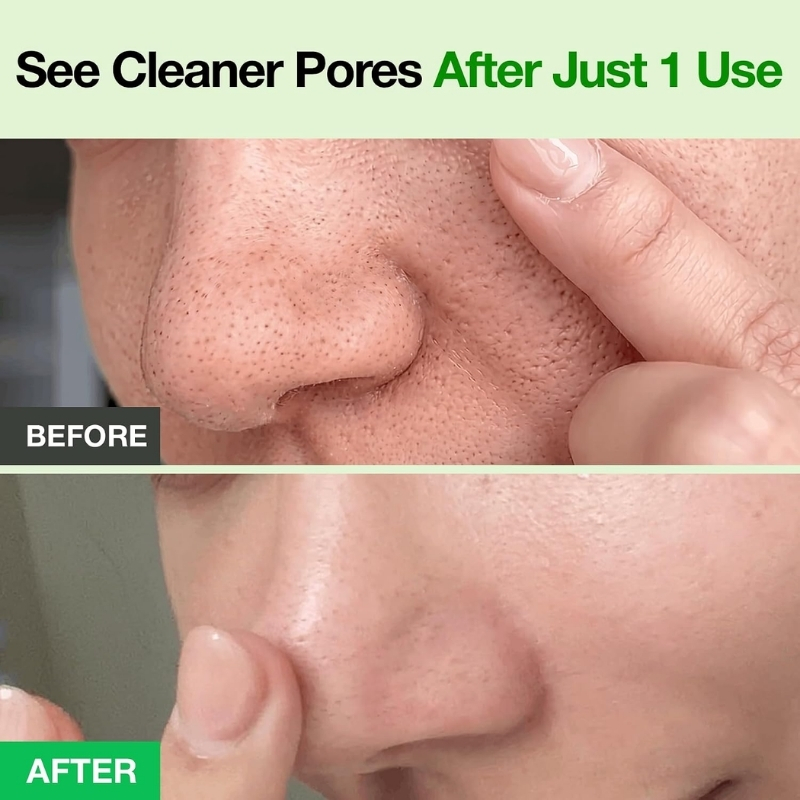
A: The supplied product information states that visible pore-cleansing improvements were observed after a single use. No complete test protocol was provided.
Q: Does it permanently shrink pores?
A: No. Pore size cannot be permanently changed by a cleanser. Removing excess sebum and surface buildup can make pores appear smaller and more refined temporarily.
Q: What is Anti Sebum P?
A: Anti Sebum P is mentioned in the supplied marketing information as part of the pore and sebum-care concept. It does not appear as a standardized INCI name, so its exact composition cannot be confirmed from the ingredient list alone.
Q: Does it contain Corn Mint?
A: Yes. Mentha Arvensis Powder is clearly listed in the supplied INCI.
Q: Is Mentha Arvensis Powder an essential oil?
A: No. It is listed as plant powder rather than Mentha Arvensis Oil or another essential oil.
Q: Does it feel cooling?
A: Mentha Arvensis Powder can contribute to a fresh, cooling skin sensation. The intensity will vary between users.
Q: Is this cleanser soap-based?
A: It contains Myristic Acid, Lauric Acid, Palmitic Acid and Stearic Acid together with Potassium Hydroxide, indicating a fatty-acid soap-based component in the cleansing system.
Q: Does it also contain amino acid surfactants?
A: Yes. Sodium Cocoyl Glycinate, an amino acid-based surfactant, is also present alongside Coco-Glucoside.
Q: Is a soap-based cleanser bad for the skin?
A: Not necessarily. It can provide effective cleansing, particularly for oily skin, but very dry or sensitive skin may find frequent use more stripping than a milder low-cleansing-strength formula.
Q: Is it suitable for oily skin?
A: Yes. The multi-clay system and soap-based cleansing component make it particularly relevant for excess sebum, shine and congested-looking pores.
Q: Is it suitable for combination skin?
A: Yes. Combination skin can focus mask application on the T-zone and other areas where excess oil or visible pores are more noticeable.
Q: Can dry skin use it?
A: Yes, but less frequent use is preferable. Dry skin may use it mainly as a short mask or occasional cleanser and should follow with hydrating skincare.
Q: Is it suitable for sensitive skin?
A: The supplied information describes it as suitable for sensitive skin, and soothing ingredients such as Centella Asiatica Extract and Beta-Glucan are present. However, the clay and soap-based cleansing system may still be too cleansing for some reactive skin, so short contact time and gradual use are advisable.
Q: Can acne-prone skin use it?
A: Yes, if well tolerated. It may help remove excess sebum and surface buildup, but it is not a medical acne treatment.
Q: Can it treat acne?
A: No. It can support cleansing and oil control, but persistent or significant acne should be assessed and treated appropriately by a dermatologist.
Q: Does it contain Ceramides?
A: Yes. Ceramide NP is clearly listed and helps support skin-barrier comfort.
Q: Does it contain Centella Asiatica?
A: Yes. Centella Asiatica Extract is present and provides soothing and skin-conditioning care.
Q: Does it contain Beta-Glucan?
A: Yes. Beta-Glucan is included for moisturizing and soothing skin-conditioning benefits.
Q: Is it fragrance-free?
A: No Fragrance or Parfum is listed in the supplied INCI, and no aromatic essential oils are listed.
Q: Does it contain essential oils?
A: No clearly identified aromatic essential oils are listed in the supplied INCI.
Q: Does it contain alcohol?
A: Ethanol and Alcohol Denat. are not listed in the supplied ingredient list.
Q: Does it contain silicones?
A: No commonly recognized silicone ingredient is listed in the supplied INCI.
Q: Does Titanium Dioxide mean this cleanser has SPF?
A: No. Titanium Dioxide is present, but its presence in a rinse-off cleanser does not mean the product provides tested or reliable sun protection.
Q: Why is the cleanser green?
A: Chromium Oxide Greens is listed in the supplied INCI and contributes to the product’s green colour.
Q: Is FULLY Green Tomato Clay Mask Cleanser vegan?
A: The supplied product information describes it as vegan, and no obvious animal-derived ingredient is identifiable in the supplied INCI. However, no recognized vegan certification details were supplied.
Q: How do I use it as a cleanser?
A: Lather approximately a pea-sized amount with water, massage gently over wet skin and rinse thoroughly with lukewarm water.
Q: How do I use it as a clay mask?
A: Apply a generous layer to dry skin, leave it for approximately 2–3 minutes, add water, gently massage until it foams and rinse thoroughly.
Q: Should I leave the clay mask on for five minutes?
A: Some supplied directions mention 3–5 minutes, while other supplied product information recommends up to 3 minutes. A 2–3 minute treatment is the more conservative option, particularly for dry or sensitive skin.
Q: Should I let the clay mask dry completely?
A: No. There is no need to wait until the clay becomes completely dry, cracked or uncomfortable. Rinse it within the recommended short treatment time.
Q: Can I use it every day as a cleanser?
A: Oily or resilient skin may tolerate regular use, but because the formula contains multiple clays and a soap-based cleansing system, dry or sensitive skin may prefer alternating it with a gentler cleanser.
Q: How often should I use it as a clay mask?
A: Oily skin can generally begin around 2–3 times per week. Dry or sensitive skin may prefer approximately 1–2 times per week or less, depending on comfort.
Q: Can I use it with Retinol or Retinal?
A: Yes, but if your Retinol or Retinal routine already causes dryness, avoid over-cleansing. Sensitive skin may prefer a gentler cleanser on retinoid nights.
Q: Can I use it with AHA or BHA exfoliants?
A: Yes, but combining a deep-cleansing clay mask with strong leave-on exfoliants may increase dryness. Alternate products if your skin becomes tight, flaky or irritated.
Q: Does the cleanser itself contain AHA, BHA or PHA?
A: No clearly identified dedicated AHA, BHA or PHA exfoliating acid is listed in the supplied INCI.
Q: Can I use it after an oil cleanser?
A: Yes. It can be used as the water-based second step of double cleansing, particularly after makeup or water-resistant sunscreen.
Q: Will it dry out my skin?
A: The formula includes Glycerin, Centella Asiatica Extract, Beta-Glucan and Ceramide NP to support skin comfort, but the combination of clays and soap-based cleansing ingredients can still feel drying to some skin types. Adjust frequency if tightness develops.
Q: What is the difference between Green Tomato Clay Pack Cleanseer and Green Tomato Clay Mask Cleanser?
A: According to the supplied information, “Green Tomato Clay Pack Cleanseer” is the Korean domestic packaging name and “Green Tomato Clay Mask Cleanser” is the global version. The contents are stated to be the same; only the product title and packaging design differ.
Q: Which packaging version will I receive?
A: The supplied information states that the Korean domestic and global versions may be distributed randomly. Both are described as containing the same product formula.
Q: Where can I buy FULLY skincare in Cyprus?
A: You can find FULLY Green Tomato Clay Mask Cleanser at Just Cosmetics, together with a curated selection of Korean Cosmetics in Cyprus.