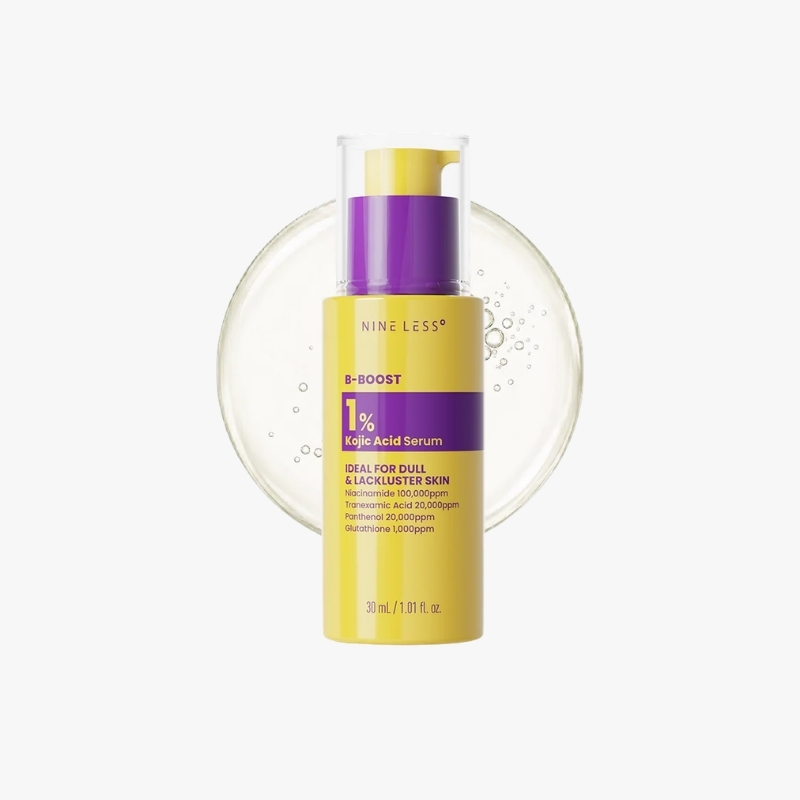


NINELESS - B-Boost 1% Kojic Acid Serum (30ml)
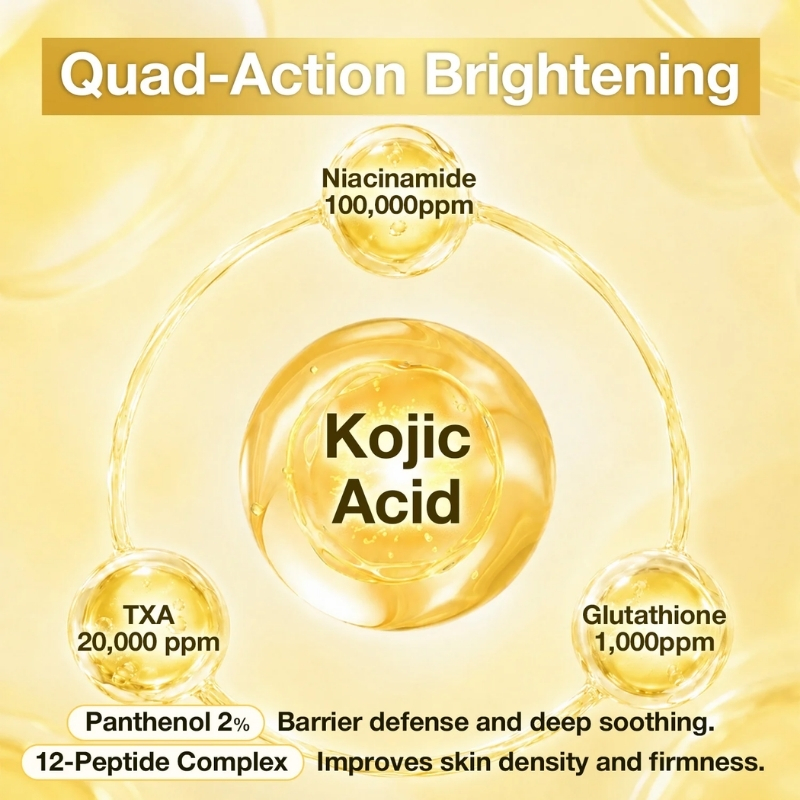
NINELESS B-Boost 1% Kojic Acid Serum is a concentrated brightening serum designed to help improve the appearance of dark spots, post-blemish marks and uneven-looking pigmentation while supporting hydration and skin comfort. According to the supplied product information, the formula combines 1% Kojic Acid, 10% Niacinamide, 2% Tranexamic Acid and 2% Panthenol, alongside Glutathione, Sodium Hyaluronate and a 12-peptide complex. Its multi-targeted formula supports a clearer, more luminous and even-looking complexion while helping maintain a comfortable moisture barrier.
Benefits:
- Targets visible dark spots: Kojic Acid, Tranexamic Acid and Niacinamide work within a multi-ingredient brightening system to help discoloration appear less noticeable over time.
- Supports a more even-looking skin tone: Niacinamide, Glutathione and botanical antioxidants help improve the appearance of dullness and uneven pigmentation.
- Helps improve post-blemish marks: Consistent brightening care can help lingering post-blemish discoloration appear more even with the surrounding skin.
- Provides concentrated Niacinamide care: According to the supplied product information, the formula contains 100,000 ppm Niacinamide, equivalent to 10%, to support brightness, barrier function and balanced-looking skin.
- Supports skin comfort: According to the supplied product information, 2% Panthenol helps moisturize and reduce a dry or uncomfortable skin feel.
- Supports firmer-looking skin: Twelve clearly named peptides help support smoother-looking texture and the appearance of elasticity.
- Provides antioxidant support: Glutathione, Tocopherol, Sea Buckthorn Fruit Extract and several botanical extracts help provide antioxidant care.
- Helps maintain hydration: Glycerin, Panthenol, Betaine, Sodium Hyaluronate and glycols support moisture retention.
- Supports the moisture barrier: Niacinamide, Panthenol and humectants help maintain comfortable, resilient-looking skin.
- Suitable for targeted brightening routines: The serum can be used morning and evening, with daily sunscreen particularly important when addressing visible pigmentation.
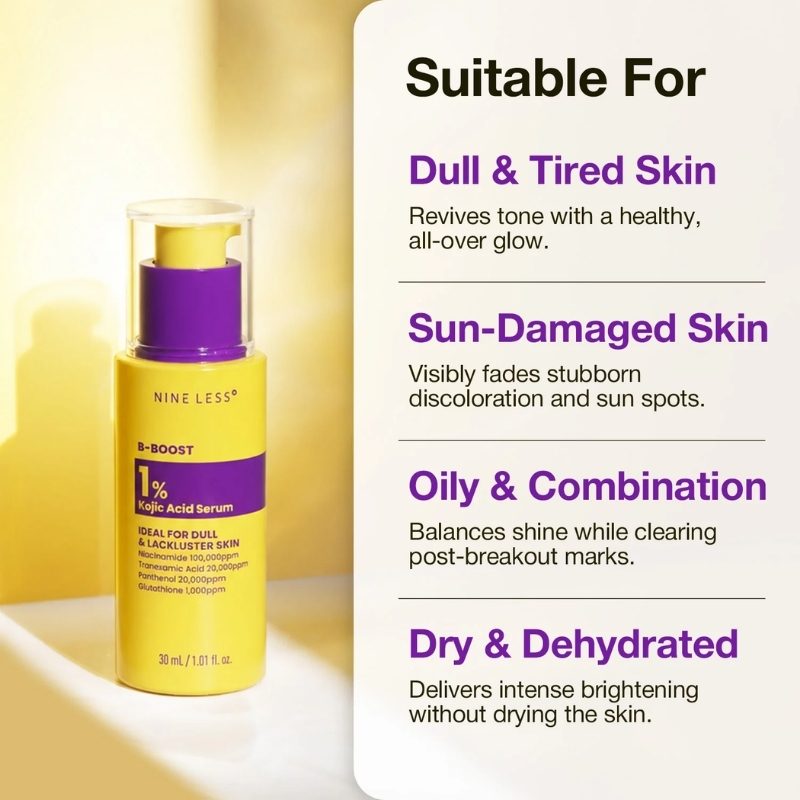
Skin Types: Normal • Dry • Dehydrated • Combination • Oily • Blemish-prone skin • Sensitive skin with appropriate active tolerance
Skin Concerns: Dark spots • Post-blemish marks • Uneven-looking pigmentation • Dullness • Uneven skin tone • Dehydration • Loss of radiance • Fine lines • Reduced-looking elasticity
Formula Notes:
- 1% Kojic Acid claim: The supplied product information states that the serum contains 1% Kojic Acid. Kojic Acid is clearly present in the INCI, but the 1% concentration is not written directly in the ingredient list and therefore cannot be independently confirmed from the INCI alone.
- 10% Niacinamide claim: The supplied information lists Niacinamide at 100,000 ppm, equivalent to 10%. Niacinamide is the second ingredient in the supplied INCI, supporting a relatively high level, but the exact 10% concentration is not stated directly in the INCI.
- 2% Tranexamic Acid claim: One supplied description states that the formula contains 2% Tranexamic Acid. Tranexamic Acid is clearly present, but the 2% concentration is not independently confirmed by the INCI.
- 2% Panthenol claim: The supplied product information states that the formula contains 2% Panthenol. Panthenol is clearly listed, but the percentage is not stated directly in the INCI.
- Peptide count: The supplied marketing information contains conflicting descriptions referring to both a 12-Peptide Complex and six peptides. The supplied INCI contains 12 clearly named peptides, so 12 is the count used in this description.
- Glutathione: Glutathione is also present. Although Glutathione is chemically a tripeptide, it is treated separately here rather than added to the count of the 12 explicitly named cosmetic peptides.
- Melasma claims: The supplied marketing information refers to targeting melasma. This serum may help improve the appearance of uneven pigmentation, but it should not be presented as a medical treatment for melasma. Persistent melasma is best assessed by a dermatologist.
- Fragrance: No Fragrance or Parfum is listed in the supplied INCI.
- Essential oils: No aromatic essential oils are listed in the supplied INCI.
- Alcohol: Ethanol and Alcohol Denat. are not listed in the supplied INCI.
- Artificial colourants: No obvious added colourant identified by a CI colour index is listed in the supplied INCI.
- Retinoids: No Retinol, Retinal or other clearly identified retinoid is listed.
How to Use:
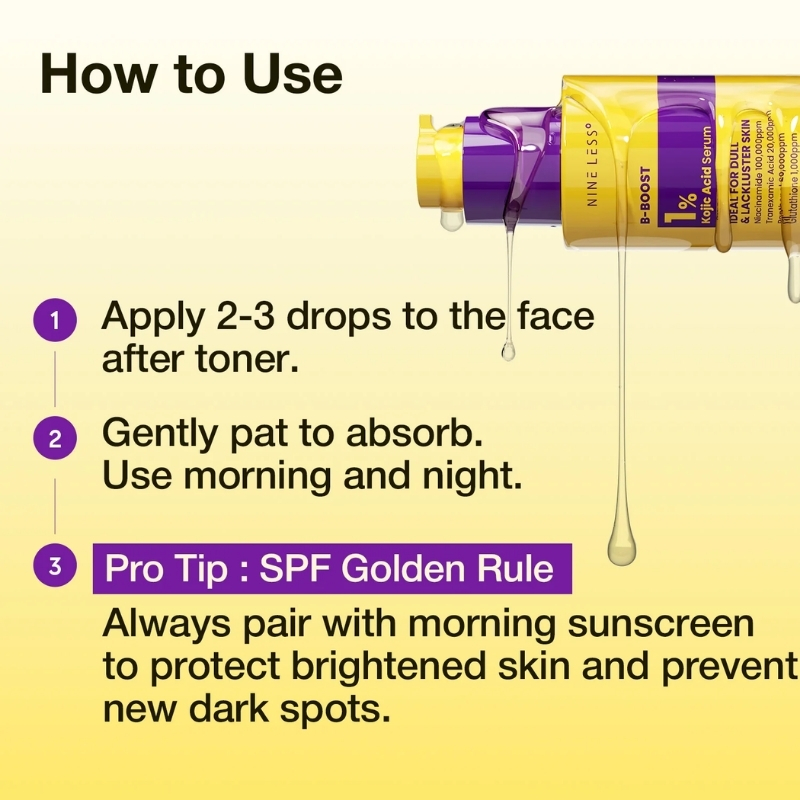
- After cleansing and toner, apply 2–3 drops to the face.
- Spread gently over areas of uneven tone or across the entire face, avoiding direct contact with the eyes and lips.
- Pat lightly until absorbed.
- Follow with moisturizer.
- Use in the morning and/or evening according to skin tolerance.
- If you are new to Kojic Acid or high-strength Niacinamide formulas, begin once daily or several times per week and increase gradually if your skin remains comfortable.
- If your routine also contains strong AHA/BHA exfoliants or Retinoids, sensitive skin may prefer alternating them rather than layering everything in the same routine.
- Avoid applying to broken, significantly irritated or freshly exfoliated skin.
- Persistent burning, pronounced redness or irritation is a reason to discontinue use.
- During daytime use, finish with a broad-spectrum sunscreen. Daily sun protection is particularly important when your goal is to improve visible pigmentation.
Key Ingredients:
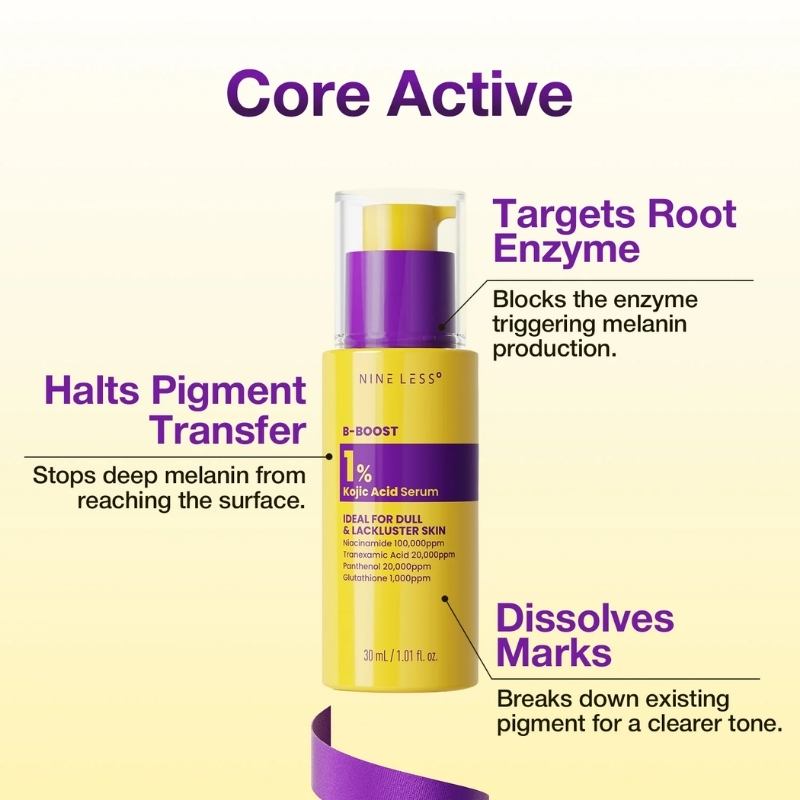
- Kojic Acid: A well-known cosmetic brightening ingredient that helps improve the appearance of dark spots and uneven-looking pigmentation.
- Niacinamide: Helps brighten dull-looking skin, support the moisture barrier and improve the appearance of uneven tone.
- Tranexamic Acid: Supports a more even-looking complexion and helps persistent discoloration appear less noticeable.
- Panthenol: Helps moisturize and support skin comfort, particularly within an active brightening routine.
- Glutathione: An antioxidant tripeptide included to support antioxidant care and a brighter-looking complexion.
- 12-Peptide Complex: A combination of twelve clearly named peptides helps support smoother, firmer-looking skin and elasticity-focused care.
- Copper Tripeptide-1: A copper-containing peptide used to support skin conditioning and a smoother-looking complexion.
- Acetyl Hexapeptide-8: A cosmetic peptide that supports the appearance of smoother skin and should not be confused with injectable botulinum toxin.
- Sodium Hyaluronate: A humectant form of Hyaluronic Acid that helps attract moisture and maintain a plumper-looking skin surface.
- Betaine: Helps maintain hydration and reduce a dry or tight feeling.
- Hippophae Rhamnoides Fruit Extract: Sea Buckthorn Fruit Extract provides antioxidant and botanical skin-conditioning support.
- Dipotassium Glycyrrhizate: A Licorice-derived ingredient that helps support skin comfort and soothing care.
- Tocopherol: Vitamin E that provides antioxidant and skin-conditioning benefits.
Ingredients:
Water, Niacinamide, Methylpropanediol, Butylene Glycol, Glycerin, Panthenol, Tranexamic Acid, 1,2-Hexanediol, Kojic Acid, Hippophae Rhamnoides Fruit Extract, Dipropylene Glycol, Hydroxyacetophenone, Caprylyl Glycol, Arginine, Carbomer, Glutathione, Glycereth-25 PCA Isostearate, Glycereth-26, Coptis Japonica Root Extract, Disodium EDTA, Betaine, Astragalus Membranaceus Root Extract, Scutellaria Baicalensis Root Extract, Theobroma Cacao (Cocoa) Seed Extract, Dextrin, Dipotassium Glycyrrhizate, Sodium Hyaluronate, Tocopherol, Acetyl Hexapeptide-8, Copper Tripeptide-1, Dipeptide Diaminobutyroyl Benzylamide Diacetate, Hexapeptide-9, Nonapeptide-1, Palmitoyl Hexapeptide-12, Palmitoyl Pentapeptide-4, Palmitoyl Tetrapeptide-7, Palmitoyl Tripeptide-1, Palmitoyl Tripeptide-5, Pentapeptide-3, Tripeptide-1
FAQ:
Q: What does NINELESS B-Boost 1% Kojic Acid Serum do?
A: It is a concentrated brightening serum designed to help dark spots, post-blemish marks, dullness and uneven-looking pigmentation appear improved while supporting hydration and skin comfort.
Q: Does it really contain 1% Kojic Acid?
A: According to the supplied product information, yes. Kojic Acid is clearly present in the INCI, although the 1% concentration is not written directly in the ingredient list.
Q: What does Kojic Acid do?
A: Kojic Acid is widely used in cosmetic brightening formulas to help improve the appearance of dark spots and uneven-looking pigmentation.
Q: Can Kojic Acid permanently remove dark spots?
A: No. It can help visible discoloration fade over time, but cosmetic products cannot guarantee permanent removal and pigmentation can recur, especially with UV exposure or irritation.
Q: Does the serum contain 10% Niacinamide?
A: The supplied product information states 100,000 ppm Niacinamide, which equals 10%. Niacinamide is also the second ingredient in the supplied INCI, although the exact percentage is not printed directly in the INCI.
Q: Is 100,000 ppm the same as 10%?
A: Yes. 100,000 ppm corresponds to 10%.
Q: Is 10% Niacinamide suitable for everyone?
A: Many people tolerate 10% Niacinamide well, but some sensitive skin types may experience flushing, tingling or irritation with higher-strength Niacinamide formulas. Introduce gradually if you are sensitive.
Q: Does it contain Tranexamic Acid?
A: Yes. Tranexamic Acid is clearly listed in the supplied INCI.
Q: Does it contain 2% Tranexamic Acid?
A: One of the supplied product descriptions states that it contains 2% Tranexamic Acid. The ingredient is confirmed in the INCI, but the 2% concentration is not stated directly there.
Q: What does Tranexamic Acid do in skincare?
A: Topical Tranexamic Acid is used in cosmetic brightening formulas to help improve the appearance of stubborn discoloration and uneven-looking tone.
Q: Can this serum treat melasma?
A: It may help improve the appearance of uneven pigmentation, but melasma is a complex pigmentation condition and the serum should not be considered a medical treatment. Persistent melasma is best assessed by a dermatologist.
Q: Does it contain Panthenol?
A: Yes. Panthenol is clearly listed.
Q: Does it contain 2% Panthenol?
A: According to the supplied product information, the formula contains 2% Panthenol. The percentage is not stated directly in the supplied INCI.
Q: What does Panthenol do?
A: Panthenol helps moisturize, condition and support comfortable-feeling skin, which is useful alongside concentrated brightening ingredients.
Q: Does it contain Glutathione?
A: Yes. Glutathione is clearly listed in the supplied INCI.
Q: What is Glutathione?
A: Glutathione is an antioxidant tripeptide composed of amino acids and is commonly included in brightening-focused skincare for antioxidant and complexion-supporting care.
Q: How many peptides does the serum contain?
A: The supplied INCI contains 12 clearly named cosmetic peptides.
Q: Why does one description say six peptides?
A: The supplied marketing information is inconsistent: one section refers to six peptides while another states a 12-Peptide Complex. The INCI contains 12 clearly named peptides, so 12 is the count supported by the ingredient list.
Q: Which 12 peptides are included?
A: They are Acetyl Hexapeptide-8, Copper Tripeptide-1, Dipeptide Diaminobutyroyl Benzylamide Diacetate, Hexapeptide-9, Nonapeptide-1, Palmitoyl Hexapeptide-12, Palmitoyl Pentapeptide-4, Palmitoyl Tetrapeptide-7, Palmitoyl Tripeptide-1, Palmitoyl Tripeptide-5, Pentapeptide-3 and Tripeptide-1.
Q: Is Glutathione counted among the 12 peptides?
A: No. Glutathione is chemically a tripeptide, but it is treated separately here. The INCI already contains 12 other ingredients explicitly named as cosmetic peptides.
Q: Does it contain Copper Peptide?
A: Yes. Copper Tripeptide-1 is listed in the formula.
Q: Is Acetyl Hexapeptide-8 Botox?
A: No. Acetyl Hexapeptide-8 is a cosmetic peptide and is not injectable botulinum toxin. It should not be described as Botox or as medically freezing facial muscles.
Q: Is Dipeptide Diaminobutyroyl Benzylamide Diacetate Botox?
A: No. It is another cosmetic peptide ingredient and is completely different from injectable botulinum toxin treatments.
Q: Can the peptides rebuild damaged skin cells?
A: They can support skin conditioning and the appearance of smoothness and elasticity, but they should not be described as medically repairing or regenerating cells.
Q: Does the serum contain Hyaluronic Acid?
A: Yes. Sodium Hyaluronate, a form of Hyaluronic Acid, is listed in the supplied INCI.
Q: Does it contain Vitamin E?
A: Yes. Tocopherol is present and provides antioxidant and skin-conditioning support.
Q: Does it contain Sea Buckthorn?
A: Yes. Hippophae Rhamnoides Fruit Extract, commonly known as Sea Buckthorn Fruit Extract, is listed.
Q: Is the serum fragrance-free?
A: Yes. No Fragrance or Parfum is listed in the supplied INCI.
Q: Does it contain essential oils?
A: No aromatic essential oils are listed in the supplied INCI.
Q: Does it contain drying alcohol?
A: No. Ethanol and Alcohol Denat. are not listed.
Q: Does it contain artificial colourants?
A: No obvious added CI colourant is listed in the supplied INCI.
Q: Does it contain Retinol or Retinal?
A: No Retinol, Retinal or other clearly identified retinoid is listed.
Q: Is it suitable for oily skin?
A: Yes. Its humectant-based serum format and high Niacinamide positioning make it suitable for oily skin concerned with discoloration, provided the formula is well tolerated.
Q: Is it suitable for dry skin?
A: Yes. Glycerin, Panthenol, Betaine, Glycereth-26 and Sodium Hyaluronate provide hydration, although dry skin should still follow with moisturizer.
Q: Is it suitable for combination skin?
A: Yes. Combination skin can benefit from both its brightening and moisture-supporting ingredients.
Q: Is it suitable for sensitive skin?
A: The supplied product information describes it as suitable for sensitive skin and the formula contains no listed Fragrance, aromatic essential oils or drying alcohol. However, Kojic Acid and a high level of Niacinamide may still irritate some sensitive skin, so gradual introduction and patch testing are advisable.
Q: Is it suitable for acne-prone skin?
A: It may be suitable for acne-prone skin, particularly when post-blemish marks are a concern, but it is not a medical acne treatment.
Q: Can it help acne scars?
A: It may help flat post-blemish discoloration appear more even over time. It cannot remove indented, raised or structural acne scars.
Q: Can I use it every day?
A: Yes, if your skin tolerates it. Sensitive skin may prefer starting once daily or several times per week before increasing frequency.
Q: Can I use it morning and night?
A: Yes. The supplied directions recommend use in both morning and evening routines.
Q: How much should I use?
A: Apply approximately 2–3 drops after toner and gently spread over the face before moisturizer.
Q: Can I use it with Vitamin C?
A: Yes. There is no general incompatibility, but if you use a strong acidic Vitamin C formula and your skin is sensitive, introduce the combination gradually.
Q: Can I use it with Retinol or Retinal?
A: Yes. The serum itself contains no retinoid. If your Retinol or Retinal already causes dryness or irritation, consider using the products at different times or on alternating nights.
Q: Can I use it with AHA or BHA exfoliants?
A: Yes, but Kojic Acid and high-strength brightening formulas can already be active on sensitive skin. Alternating strong exfoliants may help reduce irritation.
Q: Can I use it with another Niacinamide serum?
A: You can, but it is generally unnecessary because the supplied product information already states a 10% Niacinamide concentration.
Q: Can I use it with another Tranexamic Acid serum?
A: It is usually unnecessary. Layering multiple brightening serums containing similar actives may increase irritation without necessarily producing faster results.
Q: Can I use it with Kojic Acid soap or another Kojic Acid product?
A: It is better to avoid stacking multiple Kojic Acid products at first, particularly if your skin is sensitive, because excessive use can increase dryness or irritation.
Q: Do I need sunscreen while using this serum?
A: Yes. Daily broad-spectrum sunscreen is essential when your goal is to improve dark spots and uneven pigmentation because UV exposure can contribute to recurring discoloration.
Q: Can I use it during pregnancy?
A: No commonly avoided retinoid ingredient is listed in the supplied INCI. Anyone with pregnancy-specific concerns about Kojic Acid, Tranexamic Acid or other cosmetic ingredients should discuss their routine with their doctor.
Q: Where can I buy NINELESS skincare in Cyprus?
A: You can find NINELESS B-Boost 1% Kojic Acid Serum at Just Cosmetics, together with a curated selection of Korean Cosmetics in Cyprus.